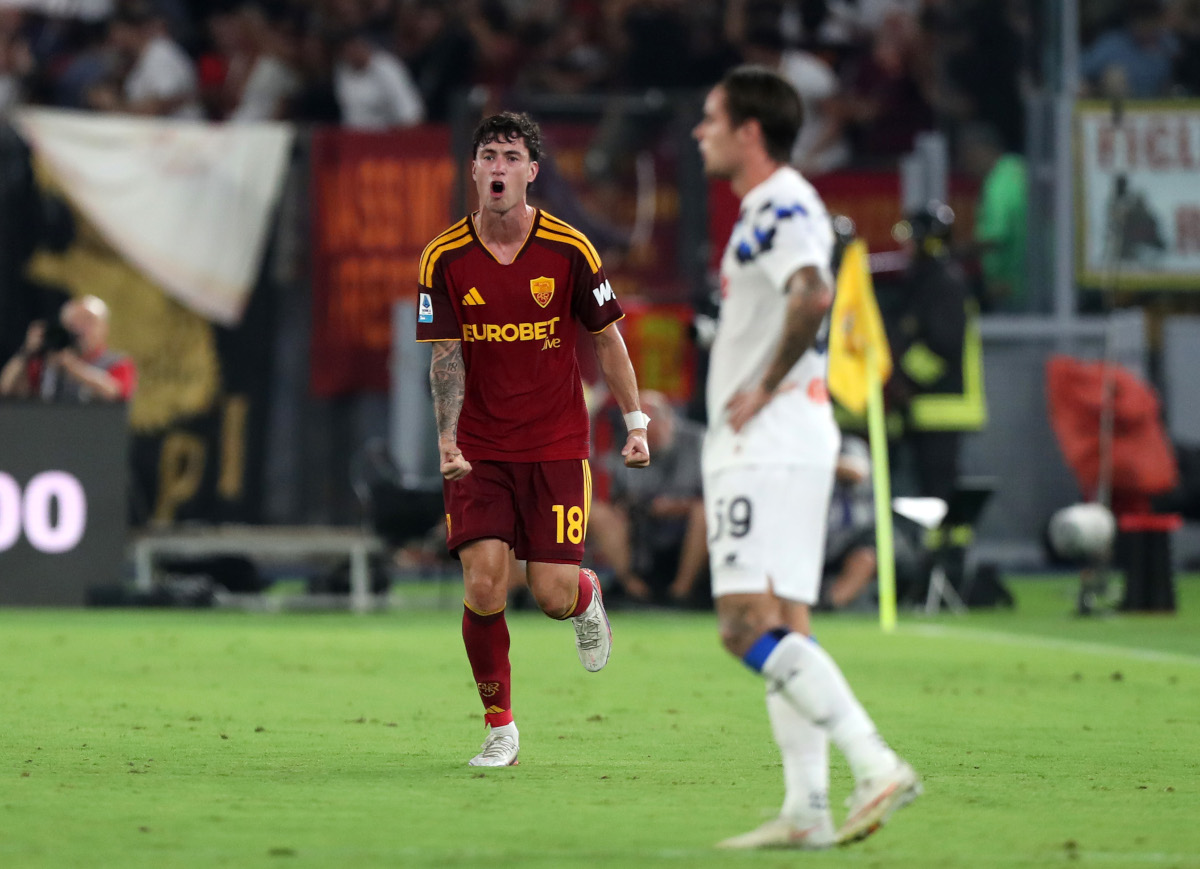
Roma trailed with three minutes remaining, but Gian Piero Gasperini’s five substitutions increased the intensity, restored the team’s aggression and ultimately produced a remarkable 2-1 victory.
Roma’s late comeback against Atalanta was dramatic, but it was not accidental.
Mario Hermoso equalized in the 90th minute before Matías Soulé scored the winner three minutes later, yet the foundations for the turnaround had been established by Gian Piero Gasperini’s work from the bench.
All five Roma substitutes contributed to changing the direction of the match. Soulé provided a goal and an assist, Santiago Castro struck the woodwork twice, Nahuel Molina increased the threat from the right and the introductions of Daniele Ghilardi and Leonardo Balerdi allowed the Giallorossi to defend more aggressively.
Roma’s initial approach
Gasperini began with his familiar 3-4-2-1 formation:
Svilar; Mancini, Ndicka, Hermoso; Lulli, Koné, Cristante, Wesley; Dybala, Mora; Malen.
Roma controlled the opening half and created several good opportunities. Marco Carnesecchi denied Gianluca Mancini, Bryan Cristante and Donyell Malen as Atalanta spent long periods defending inside their own half.
The initial structure worked. Roma progressed the ball through Cristante and Manu Koné, while Wesley provided penetration from the left. Rodrigo Mora moved between the lines and Paulo Dybala searched for space behind Malen.
The problem was not Roma’s ability to advance—it was their finishing. Several attacks ended with shots lacking the power or placement required to beat Carnesecchi.
Atalanta punished that inefficiency two minutes after halftime. Charles De Ketelaere won his duel with Hermoso, allowing Éderson to collect the loose ball and drive a powerful finish past Mile Svilar.
For the first time this season, Roma were behind.
Soulé and Molina change the right side
Gasperini’s first response arrived in the 54th minute, when Soulé and Molina replaced Mora and Emanuele Lulli.
The substitutions gave Roma a different attacking dynamic.
Lulli had provided energy and discipline, but Molina offered more experience in advanced positions. The Argentine immediately looked to make forward runs and deliver the ball into the penalty area.
Soulé gave Roma another left-footed creator capable of operating from the right, moving centrally and combining with Dybala. His presence also allowed the Giallorossi to attack Atalanta with greater unpredictability.
Rather than simply circulating possession around the visitors’ defensive shape, Roma began creating more direct situations around the penalty area.
Soulé attempted a header and several shots before eventually deciding the match. His willingness to take responsibility became increasingly important as the pressure grew.
Castro gives Roma a stronger penalty-area presence
The introduction of Castro for Malen in the 63rd minute was another decisive moment.
Malen had produced Roma’s best opportunity of the first half but was unable to continue his five-goal start to the season. Castro entered with fresh energy and immediately gave Atalanta’s defenders a more physical problem.
The Argentine attacked crosses aggressively, competed for loose balls and occupied the central defenders inside the penalty area.
His performance deserved a goal. Castro struck the post with a right-footed effort before directing a header against the crossbar. Those opportunities increased the pressure on Atalanta and made it increasingly difficult for Maurizio Sarri’s team to escape its own half.
Castro did not score or provide an assist, but his contribution was central to the comeback. The Italian newspapers awarded him an average rating of 7.08, placing him behind only Soulé in the combined Roma-Atalanta player ratings.
Fresh defenders restore Roma’s aggression
Gasperini’s defensive substitutions were just as important.
Ghilardi replaced Mancini in the 63rd minute before Balerdi entered for Ndicka four minutes later. Atalanta had begun finding space on the counterattack, with Roma committing additional players forward in search of an equalizer.
Introducing two fresh central defenders allowed Roma to defend higher and more aggressively. Ghilardi and Balerdi could step into midfield, challenge for loose balls and prevent Atalanta from relieving the pressure.
Gasperini explained the reasoning during his post-match interview.
“The changes at the back were important too, with Balerdi and Ghilardi coming on because they were breaking forward dangerously. With the two of them coming on, we regained our attacking impetus.”
Those substitutions demonstrated an important principle of Gasperini’s football: changing defenders does not necessarily represent a defensive decision.
Freshness at the back allowed Roma to take greater risks further forward while retaining the speed and aggression required to defend Atalanta’s counterattacks.
Soulé provides the decisive quality
Roma’s pressure finally produced a breakthrough in the 90th minute.
Soulé delivered an inviting corner into the penalty area and Hermoso directed his header beyond Carnesecchi. The goal rewarded Roma’s persistence, but Gasperini’s side continued attacking instead of accepting the draw.
Three minutes later, Dybala found Soulé near the right side of the penalty area. The substitute shifted the ball onto his left foot and beat Carnesecchi at the near post to complete the comeback.
Soulé had been on the pitch for fewer than 40 minutes but directly contributed to both goals. His performance earned him an average newspaper rating of 7.83 and the title of RomaDaily Player of the Match.
Gasperini’s bench offers a glimpse of Roma’s improved quality
Roma may remain short in terms of overall numbers, but the victory demonstrated the improved quality available to Gasperini.
The coach replaced Malen, Mora, Lulli, Mancini and Ndicka without weakening the team. Roma instead became more dangerous as the match progressed.
Each substitution addressed a specific need:
- Soulé added creativity and individual quality.
- Molina increased Roma’s attacking presence on the right.
- Castro provided aggression and a stronger penalty-area presence.
- Ghilardi supplied fresh legs and proactive defending.
- Balerdi helped Roma protect their high defensive line.
That combination allowed the Giallorossi to maintain their pressure despite the difficult conditions and the energy expended during a dominant first half.
Roma’s comeback was defined by Hermoso’s header and Soulé’s winner, but it was constructed through five substitutions that gave the team exactly what it needed.
With the Champions League beginning against Fenerbahçe, Gasperini will require contributions from his entire squad. The victory over Atalanta provided the first convincing evidence that Roma’s alternatives can change important matches rather than simply complete them
Leave a Reply